How to Stop Demand Barking Without Punishment
- 2 days ago
- 6 min read
The barking starts the moment you sit down to eat, answer an email, or stop throwing the ball. Your dog may stare at you, paw at the cupboard, then turn up the volume when nothing happens. Learning how to stop demand barking is not about winning an argument with your dog. It is about teaching them a calmer, clearer way to ask for what they need.
Demand barking can be exhausting, especially when it has become part of the household routine. The encouraging news is that barking is communication, not defiance. With patient, force-free training, you can help your dog feel heard while building the skills to wait, settle, and make good choices.
Why dogs bark for attention or access
A dog may demand bark because it has worked before. Perhaps barking has earned dinner, a tossed toy, eye contact, a walk, a spot on the sofa, or even a frustrated “quiet!” From your dog’s point of view, any response can be rewarding if it gets them noticed.
Demand barking can also increase when a dog is tired, under-stimulated, over-excited, worried, or unsure what to do next. A young puppy may need help learning how household life works. An adolescent dog may have plenty of energy but not yet have the impulse control to pause. An adult dog may have practised barking for months or years because it reliably produces results.
Before making a training plan, take a moment to ask what your dog is requesting. Are they hungry? Do they need a toilet break? Have they had enough rest? Are they asking for connection after being alone? Is the bark happening near a window, when visitors arrive, or when another dog passes by? If the barking is sudden, persistent, or paired with signs of discomfort, speak with your veterinarian. Pain and health changes can affect behaviour.
How to stop demand barking by teaching a better choice
The goal is not simply less noise. The goal is a dog who understands what does work: four paws on the floor, a sit, a hand target, going to a mat, or waiting quietly for a few seconds. Pick one easy behaviour to begin with and use it consistently.
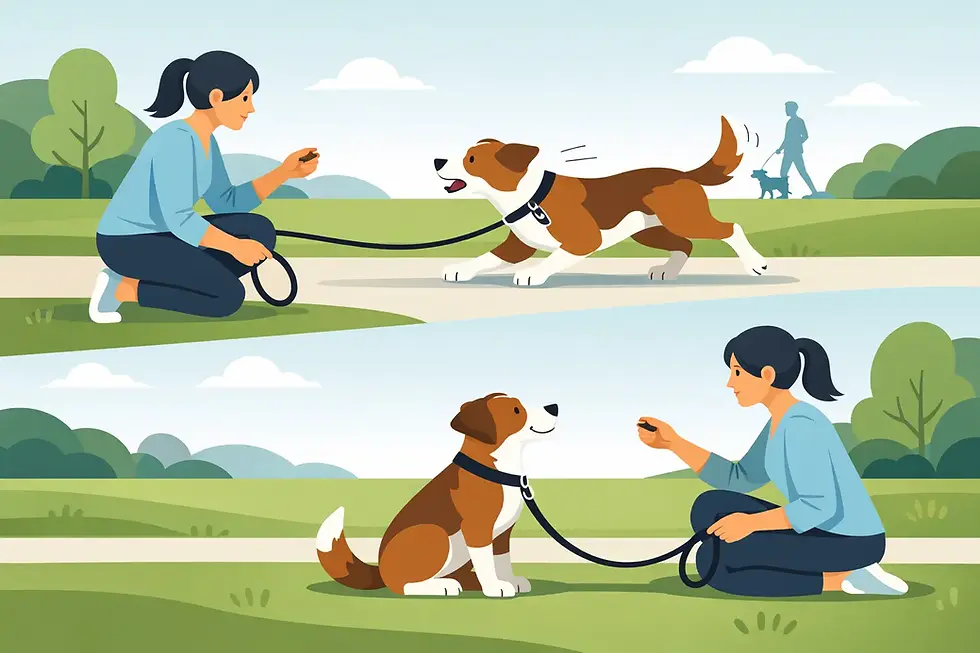
For example, if your dog barks for a ball, keep the ball still and wait for a brief pause. The instant they are quiet, mark it with a cheerful “yes” or a click, then offer the ball or begin the game. At first, that quiet moment may only last one second. That is fine. You are building a new pattern one small success at a time.
If your dog barks for meals, prepare food before they become overly hungry, then ask for a simple, familiar behaviour such as a sit or standing calmly on a mat. Place the bowl down while they are quiet. If barking starts, calmly lift the bowl or pause your movement. When they offer even a tiny moment of quiet, continue. There is no need to scold, lecture, or make the experience tense.
Timing matters. Your dog needs to connect the quiet behaviour with the thing they want. If you wait too long after the pause, or give the reward while barking is happening, the lesson becomes harder to understand.
Start with an achievable pause
Many well-meaning owners accidentally make the first step too difficult. If your dog has been barking for five minutes, expecting them to suddenly settle silently for five more is a big ask. Begin by noticing and rewarding the smallest break in the barking.
Once your dog is reliably offering a short quiet pause, gradually build duration. Ask for two seconds, then three, then five. Keep your criteria realistic. If barking returns, it usually means the step was too challenging, the reward was not valuable enough, or your dog was already too excited to succeed. Simply make the next repetition easier.
Meet needs before they become demands
Training works best when it sits alongside a thoughtful daily routine. A dog who has appropriate exercise, sniffing time, play, rest, companionship, and enrichment has more capacity to practise calm behaviour.
This does not mean trying to wear your dog out with endless physical activity. Some dogs become fitter and more frantic when every difficult moment is answered with more fetch or longer runs. Balanced outlets are often more helpful: a sniffy walk, scatter-feeding part of a meal, a food puzzle, a short training game, or a chance to relax with a chew.
Predictability can help, too. If your dog regularly barks at 5 p.m. for dinner, try serving meals on a consistent schedule before they reach a point of frustration. If they bark when you finish work, plan a brief connection ritual: a toilet break, a few minutes of training, and a calm activity afterward. Meeting legitimate needs proactively is not giving in. It sets your dog up to practise the behaviour you want.
Avoid accidentally paying the barking
This is often the hardest part, because demand barking can get louder before it gets better. If barking has previously earned attention, your dog may try harder when the old strategy stops working. That does not mean the training has failed.
When you are certain your dog’s needs have been met, avoid giving the requested item while they are barking. Instead, wait for the smallest quiet moment and reinforce that. Keep your body language neutral. Looking at your dog, repeating “no,” pushing them away, or negotiating can all become part of the attention they were seeking.
However, ignoring is not a complete training plan. Leaving a distressed dog to bark for long periods does not teach them what to do instead, and it can be especially difficult for dogs who are anxious or overwhelmed. Pair calm non-response with active teaching: reward quiet, practise a settle behaviour, and make the environment easier while your dog learns.
Give your dog a calm place to go
A mat or bed can become a wonderful alternative to demand barking. Start when your dog is already relatively calm. Place a mat nearby, and reward any interest in it: looking at it, stepping on it, then choosing to lie down. Deliver treats slowly between their paws so the mat becomes a place where good things happen.
Later, use the mat during predictable high-demand moments, such as meal preparation or family time on the sofa. Give your dog a chew, stuffed food toy, or a small scatter of treats on the mat before barking begins. This is not bribery. It is thoughtful management while you build a new habit.
As your dog gains confidence, practise short periods of calm while you move around the room, sit down, or prepare a snack. Return often to reward the choice to settle. A dog who has a clear job is less likely to invent one by barking.
Make sure everyone uses the same plan
Mixed messages slow progress. If one person waits for quiet before opening the door but another opens it during barking, your dog will understandably keep trying barking. Agree on the replacement behaviour and the response ahead of time.
A simple household plan might be: needs are met on schedule, barking does not make the requested thing happen, and quiet behaviour does. Keep treats or a toy nearby at first so that family members can reward the right moment. Children should be supported by an adult rather than asked to manage intense barking on their own.
When demand barking needs extra support
Some barking that looks like demanding may be rooted in fear, separation distress, frustration around barriers, or reactivity to people and dogs. If your dog cannot settle, panics when ignored, barks intensely at triggers, or redirects onto people, a tailored plan is the kindest next step.
A qualified force-free trainer can help you look beyond the noise and identify the emotion driving it. At Best Paw Forward Dog Training, private support can help Nanaimo dog families create practical routines and skills without pain, shock, or fear.
Your dog is not trying to make life difficult. They are using the communication that has made sense to them so far. When you respond with patience, clear boundaries, and lots of chances to succeed, quiet can become a choice your dog is happy to make.