Dog Anxiety Training Without Punishment Works
- 1 day ago
- 6 min read
When your dog trembles as visitors arrive, barks at another dog across the street, or cannot settle when left alone, the goal is not to make the behaviour stop at any cost. Dog anxiety training without punishment starts by asking a more useful question: what is your dog trying to cope with, and how can we help them feel safer?
An anxious dog is not giving you a hard time. They are having a hard time. That distinction changes everything. It moves training away from intimidation and toward practical support, clear communication, and skills your dog can use in everyday life.
Why punishment makes anxiety harder
Punishment may appear to work because it can interrupt a bark, lunge, growl, or frantic movement in the moment. But stopping the outward behaviour does not necessarily change the worried feeling underneath it. In some cases, it teaches a dog that scary things predict more discomfort.
For example, if a dog is nervous around unfamiliar dogs and receives a leash correction for barking, they may become quieter. They may also begin to associate the sight of another dog with both fear and pain. The result can be a dog who is more tense, more reactive, or less likely to give the early warning signals that tell us they need space.
Tools and techniques based on pain, fear, startle, or intimidation are not needed to teach good behaviour. Shock, prong collars, harsh leash corrections, yelling, and forced exposure can compromise trust at the very time your dog needs you to be their safe base. A force-free approach is not permissive. It is structured, thoughtful, and focused on lasting learning.
Start with safety, not obedience
Before asking an anxious dog to learn, make the situation easier. Anxiety rises when a dog feels trapped, overwhelmed, tired, unwell, or repeatedly pushed beyond what they can handle. Management is not avoiding training. It is part of training because it prevents rehearsal of panic and gives your dog room to succeed.
At home, that might mean closing blinds during busy delivery hours, setting up a quiet resting space, or using a baby gate so your dog can observe visitors from a comfortable distance. On walks, it may mean crossing the street early, choosing quieter routes, or walking at times when your dog is better able to cope. These choices are kind, but they are also practical.
Pay attention to the small signs that your dog is becoming uncomfortable: slowing down, scanning, lip licking, yawning when they are not tired, refusing treats, stiffening, pulling away, or suddenly becoming extra silly and busy. A dog who will not take food may be too worried to learn in that moment. Create more distance or leave the situation rather than asking them to push through it.
If anxiety is new, severe, or escalating, speak with your veterinarian. Pain, illness, sensory changes, and other medical concerns can affect behaviour. Some dogs also benefit from veterinary support alongside training. There is no prize for struggling without help.
Build confidence in small, winnable steps
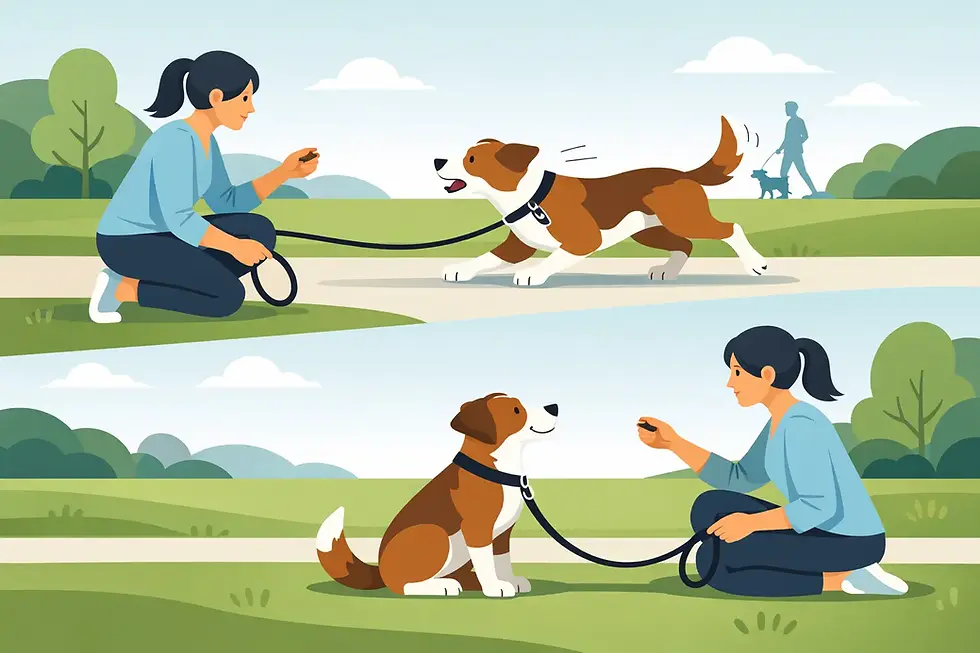
The heart of dog anxiety training without punishment is gradual, positive practice. Rather than confronting a dog with the full version of what scares them, we work at an intensity they can handle and pair that experience with something good.
Say your dog worries about bicycles. Seeing one pass two metres away may be far too difficult. But spotting a bicycle at the far end of a park, then receiving a few tasty treats and moving away, may be manageable. Over repeated sessions, your dog can learn that bicycles are not a signal to panic and that you will listen when they need space.
The details matter. Progress does not always move in a straight line, and the right distance varies from dog to dog. A calm adult dog may be able to watch a trigger from across a street; a sensitive puppy may need far more room. Rain, fatigue, a busy environment, or a string of stressful events can all make a familiar challenge feel harder. Adjusting the plan is good training, not failure.
Keep sessions short enough that your dog finishes feeling successful. Several easy, positive repetitions are more valuable than one long session that leaves everyone frustrated. Use rewards your dog genuinely enjoys, whether that is food, sniffing, a toy, praise, or the chance to move farther away.
Teach useful skills away from the hard moment
Dogs cannot always learn a brand-new skill while they are frightened. Build helpful behaviours first in easy places, then bring them into more challenging settings gradually.
A cheerful name response, a hand target, turning with you, finding treats on the ground, settling on a mat, and checking in with you can all become valuable tools. Games-based training is especially useful here because it gives dogs a clear job and helps them practise optimism, focus, and flexible thinking.
These skills are not meant to distract your dog from their feelings forever. They give you a shared language. When your dog notices something difficult, you can guide them toward a familiar, rewarding action and create distance before anxiety takes over.
Let your dog have a voice
Choice is powerful for worried dogs. Whenever it is safe, allow your dog to move away, pause, sniff, or observe from a distance. Respecting those choices does not reinforce fear. It shows your dog that communication works.
This is particularly important with greetings. Not every dog wants to meet every person or dog, and they do not need to. A dog can live a full, happy life without accepting attention from strangers. Ask visitors to ignore your dog at first, avoid reaching over their head, and let the dog decide whether to approach. If they choose not to, that is useful information, not a problem to correct.
Children need guidance, too. Help them understand that a resting, hiding, or retreating dog should be left alone. Calm interactions, predictable routines, and adults who advocate for the dog can make a home feel much safer.
Be careful with exposure
Socialization does not mean introducing your dog to everything, all at once. For puppies, it means creating safe, positive experiences with the world while protecting them from being overwhelmed. For adolescent and adult dogs, it means building new associations at a pace that supports confidence.
Flooding is the opposite approach: keeping a dog near something frightening until they stop reacting. A dog may become still or quiet during this experience, but that does not mean they feel safe. They may be shut down, exhausted, or unable to escape. Real progress looks more like soft body language, willingness to engage, recovery after a surprise, and growing comfort over time.
A well-run group class can be a wonderful place to practise around carefully managed distractions, but it is not the right starting point for every dog. Some dogs need private support first. There is no shame in choosing the setting that gives your dog the best chance to learn.
Support the whole dog
Training plans work best when they fit real life. An under-rested dog, a dog with little opportunity to sniff and explore, or a dog whose days are full of unpredictable triggers may have less capacity for learning. Gentle enrichment, age-appropriate exercise, predictable routines, and quiet recovery time all support emotional wellbeing.
Avoid assuming that a tired dog is automatically a calm dog. High-intensity exercise can help some dogs, but it can leave others more aroused. Sniff walks, food puzzles, easy training games, and calm time with their people are often just as valuable. Watch your individual dog and let their behaviour guide the plan.
For barking, lunging, separation concerns, or persistent fear, professional guidance can make the process clearer and safer. At Best Paw Forward Dog Training, humane training plans focus on your dog’s emotional needs alongside the practical skills that make daily life easier. Whether your dog is a nervous puppy or an adult who has practised worrying for years, learning can begin with one manageable step.
Your dog does not need to be brave on demand. They need patient support, clear choices, and enough successful experiences to discover that the world can feel safer. Meet them where they are, celebrate the small wins, and keep moving forward together - one best paw at a time.