


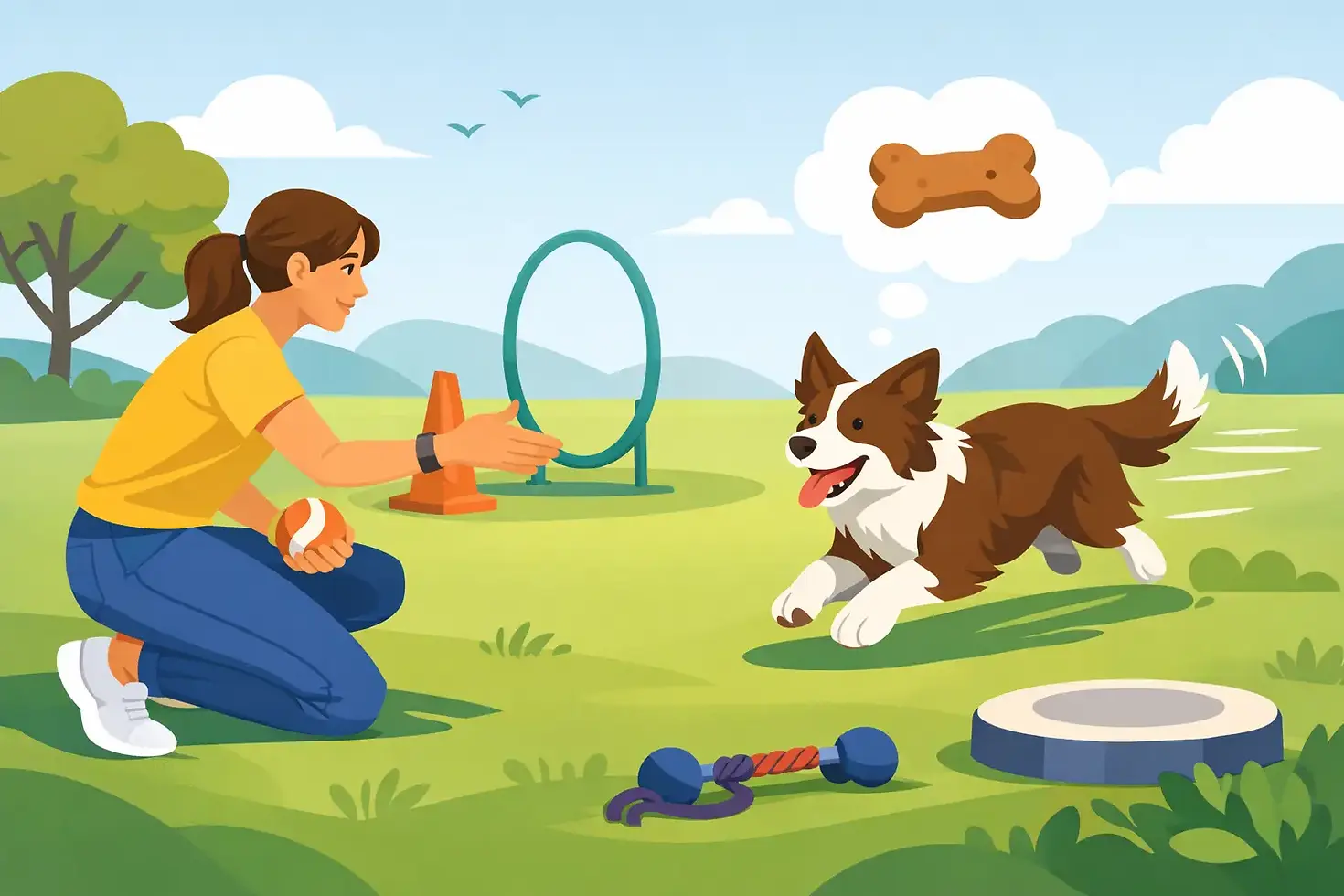
How to Teach Dog Recall With Games That Work
Your dog has just spotted a squirrel at Bowen Park, or caught an exciting scent on a beach walk. Calling them back should not feel like a battle of wills. When you know how to teach dog recall with games, coming when called becomes a happy, well-practised habit - one that protects your dog while strengthening the relationship you share.
Recall is not obedience for obedience’s sake. It is a safety skill, a freedom skill, and a communication skill. Dogs who love returning to their people can enjoy more choice, exploration, and time together. The goal is not to make your dog afraid to ignore you. It is to teach them that turning toward you is consistently the best option available.
Start with the right recall mindset
A recall cue is a promise. Each time you say your dog’s name followed by “come,” “here,” or another chosen word, you are telling them that something good will happen when they arrive. That reward might be food, a game of tug, a tossed toy, praise, access to sniffing, or being released to keep exploring. What matters is what your dog finds valuable in that moment.
This is why calling a dog only to end the fun, clip the leash on, trim nails, or leave the park can make recall weaker over time. Those things still need to happen, of course. Simply balance them with many recalls that lead to treats, play, affection, or a cheerful “go sniff” release.
Choose one cue and protect it. Say it once in a warm, upbeat voice, then help your dog succeed rather than repeating it louder and louder. If they are not likely to respond, they are not being stubborn. The environment may simply be too difficult, the distraction too powerful, or the skill not yet practised enough at that level.
Set up success before you add distractions
Begin indoors, where your dog is relaxed and there is little competing for their attention. Have soft, high-value treats ready, such as small pieces of cooked meat or cheese, if those suit your dog’s diet. For toy-motivated dogs, keep a favourite toy nearby.
Say your recall cue once when your dog is only a few steps away. The instant they turn toward you, mark that choice with a cheerful “yes,” then reward generously when they reach you. Feed several treats one after another at your feet, or play for a few seconds. You want arriving close to you to feel worthwhile.
Avoid reaching over your dog’s head or immediately grabbing their collar in early practice. Some dogs learn to hover just out of reach when hands predict restraint. Instead, reward close to your body and gradually build a positive collar touch through a separate game.
Short sessions work best. Three or four successful recalls around the house are more valuable than calling repeatedly until your dog tunes you out. Finish while your dog is still eager.
Recall games that make returning fun
Games give your dog repetition without making recall feel like a test. They also teach a valuable lesson: paying attention to you can be exciting, even when the world is interesting.
The chase-me game
Instead of standing still and calling your dog, say your cue and move away from them. Jog a few steps, clap lightly, or use an inviting, playful voice. Most dogs are naturally drawn to chase movement, and moving away makes it easier for them to choose you.
When your dog catches up, celebrate. Offer treats, tug, or a brief cuddle if they enjoy it. Then release them to wander again or begin another simple activity. This game is especially useful for puppies and adolescent dogs, whose attention can disappear quickly outdoors.
Recall ping-pong
This game is ideal for two people. Stand a short distance apart in a quiet room or fenced yard. One person calls the dog, rewards them when they arrive, then the other person calls and rewards.
Keep the distance easy at first. As your dog understands the game, increase the space slightly or practise in a new, low-distraction location. The point is not to tire your dog out by sending them back and forth. It is to make running to a person feel like a brilliant opportunity.
Hide and seek
Ask someone to gently hold your dog, or wait until they are briefly occupied nearby. Hide behind a doorway, tree, or piece of furniture, then call once. When your dog finds you, make it a small celebration.
Hide and seek builds enthusiasm for locating you and encourages your dog to keep track of where you are on walks. Start with obvious hiding places. If your dog cannot find you quickly, make a sound or step partly into view so they do not become frustrated.
The collar-grab game
A reliable recall includes being able to safely take your dog’s collar or harness when they arrive. Practise this without ending the fun. Reach gently toward the collar, feed a treat, touch the collar, feed another treat, then release your dog back to something enjoyable.
Over several sessions, progress to lightly holding the collar for a second before rewarding and releasing. Your dog should learn that a hand on their collar predicts good things, not disappointment or pressure. This small game can make a meaningful difference when you need to secure your dog near a road, another animal, or an unexpected hazard.
The surprise recall reward
Once your dog is responding well, occasionally make a recall extra special. Call them away from an easy distraction and offer a jackpot - several treats in a row, a favourite toy, or a short game of chase-me. Then, when it is safe, release them back to what they were doing.
This teaches your dog that coming back does not always mean losing access to the interesting thing. In fact, returning to you can be part of getting more of what they want.
How to teach dog recall with games outdoors
Moving outdoors is not a small step. A quiet backyard, a neighbourhood sidewalk, and a busy Vancouver Island trail each ask very different things of your dog. Treat new locations as new lessons, not as proof that your dog should already know better.
Use a well-fitted harness and a long line in open areas until recall is dependable around real-life distractions. A long line allows room to explore while preventing your dog from rehearsing running off. It is a safety tool, not something to jerk or use for correction. Hold it carefully, avoid wrapping it around your hand, and choose an area without hazards where it could tangle.
At first, call your dog when they are already glancing toward you, moving in your direction, or sniffing something mildly interesting. Reward, then release them to sniff again. Gradually practise around more challenging distractions, such as people at a distance, other dogs, bicycles, birds, or interesting smells.
Distance matters as much as the distraction itself. If your dog can watch another dog calmly from 20 metres away but cannot respond at five metres, work at the distance where they can think and succeed. Recall training should build confidence, not push a dog into overwhelm.
Keep your cue meaningful
If your dog does not come when called, resist the urge to repeat the cue. Move closer if possible, use your long line to prevent them from moving farther away without pulling them toward you, and regain their attention with a cheerful sound or by moving away. Then make the next repetition easier.
Never punish your dog for eventually coming back. Even if they have ignored you for several frustrating minutes, their arrival is the moment to reinforce the behaviour you want next time. Quietly manage the situation afterward and consider what made the recall too difficult.
For an emergency recall, choose a separate word or sound that you will reserve for truly urgent moments. Pair it repeatedly at home with an exceptional reward, such as a handful of favourite treats. Do not use it casually. A well-conditioned emergency cue can be invaluable, but it still needs ongoing practice.
When recall needs extra support
Some dogs struggle with recall because they are frightened, highly aroused, reactive, or still learning how to cope around triggers. A dog who barks and lunges at other dogs, for example, may be too emotionally overwhelmed to respond in close quarters. More treats and louder calling will not solve that on their own.
In these cases, management comes first: use a leash or long line, create distance, and avoid setting your dog up for situations beyond their current skills. Individual training support can help you build recall alongside confidence, calmness, and practical coping skills. At Best Paw Forward Dog Training, this work is always guided by a no-pain, no-shock, no-fear approach.
Every joyful return is a vote for connection. Practise often, make it worth your dog’s while, and let their growing confidence guide the next step. The most reliable recall is built one happy choice at a time.


